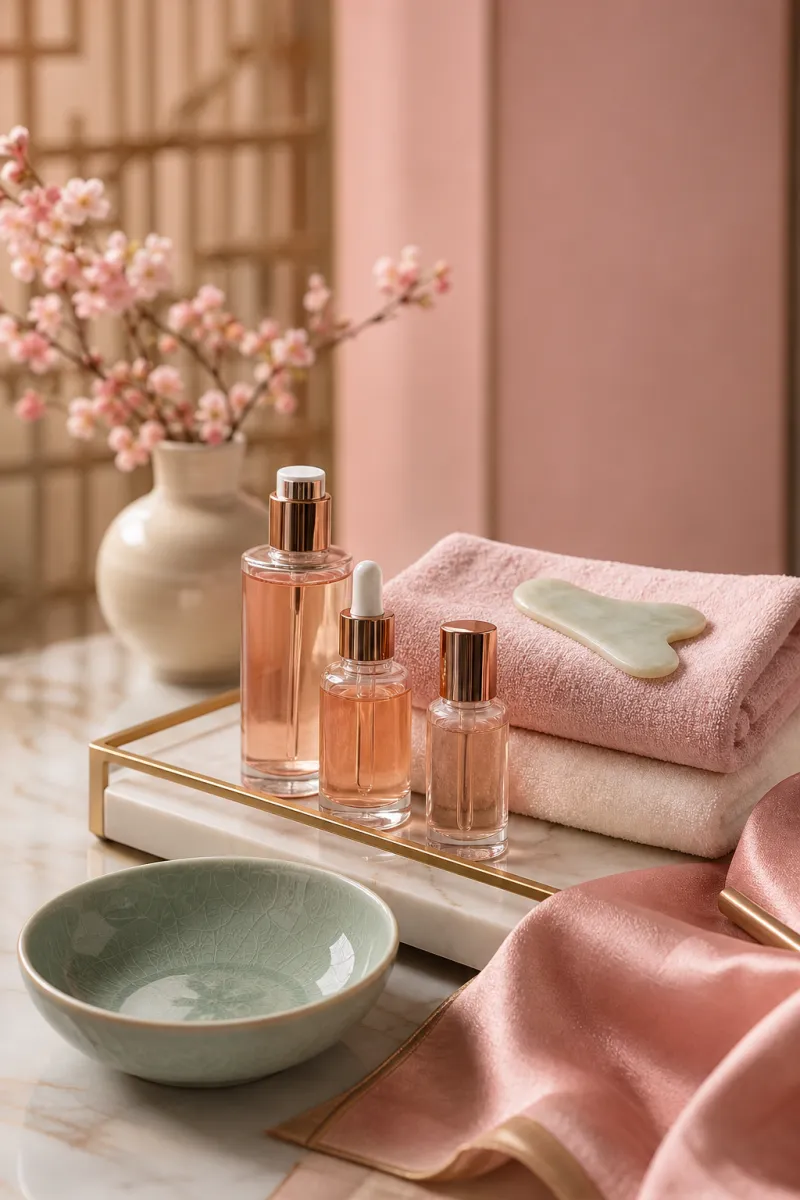
A Seoul facial spa session is cosmetic care in which an esthetician cleanses, exfoliates, massages and masks healthy skin for comfort and a fresh look that lasts a few days. It is not medical treatment, so nothing in it should break the skin or reach below the surface layer. Most visits follow the same order: a short talk about your skin, a double cleanse, a gentle exfoliating step, optional extraction, massage, a mask and a finish with moisturizer and sunscreen. What separates one spa from another is less the menu than the hygiene and how openly products are named. Below are the steps in order, the questions worth asking at the door, and the skin signs that point to a clinic first.
Guide
What happens in the chair, in order
A spa facial runs in a predictable sequence, which helps you notice a step that does not belong. It opens with a question sheet or chat about skin type and allergies, then moves from surface cleaning to calming.
- Double cleanse: an oil or balm lifts sunscreen and makeup, then a gel cleanser follows.
- Exfoliation: a mild enzyme, a gommage or a low-strength acid toner.
- Steam or warm towels to soften the surface.
- Extraction of blackheads with gloved fingers or a loop tool, never a needle.
- Massage of face, neck and shoulders by hand, roller or gua sha stone.
- Mask: a sheet, rubber modeling or cream mask, sometimes under an LED panel.
- Finish: moisturizer and sunscreen before you head out.
Guide
Hygiene questions worth asking at the door
Spas vary more in cleanliness than in their menus, and these questions take a minute on arrival. A calm, specific answer is reassuring; a vague one is a reason to skip extraction or leave. A tender bump two or three days after extraction is worth showing to a doctor rather than squeezing again.
- Are extraction tools sterilized between guests or single-use, and unwrapped in front of you?
- Will the esthetician put on fresh gloves before touching open pores?
- Are towels, headbands and bed covers changed for every guest?
- Is cream taken from jars with a clean spatula rather than fingers?
Guide
Product questions: names, strength and a patch test
Ask the name of every product that goes on your face, exfoliants above all. A spa acid toner and a clinic chemical peel can share the same acid while differing in strength, pH and contact time. A 2014 review of chemical peels by Cortez and colleagues in Facial Plastic Surgery Clinics of North America explains that peel depth depends on the agent, its concentration and how it is applied, and treats deeper peels as medical procedures that need careful patient selection and aftercare.
So ask not only which acid, but how strong and for how long. A spa exfoliant should leave skin briefly pink at most, not peeling for days.
- Ask to see labels or a product list, and photograph them if you react easily.
- Mention fragrance or preservative allergies, and ask for a patch test if skin care has irritated you before.
- Say if you use retinoids or acne tablets, because even a mild acid can sting on that skin.
Guide
What the massage step can realistically do
Massage eases a tight jaw and neck, but lasting shape change is another matter. In a 2025 randomized trial by Ahn and colleagues in the Journal of Cosmetic Dermatology, 34 women massaged their own faces with a roller or a gua sha tool for 10 minutes, five times a week, over eight weeks. Both groups showed small measured contour changes, and the tools differed in their effects on muscle tone and elasticity.
That routine adds up to 40 sessions measured with instruments. One spa massage on a trip is a far smaller dose, so read slimming or lifting lines on a menu as marketing.
Guide
Skin that should see a clinic instead of a spa
A spa works on healthy skin. When the skin itself has a problem, rubbing, steam and acids can make it worse, so a skin clinic in Hongdae or elsewhere in Seoul should find the cause first and say whether a facial suits you yet.
- Deep, painful or cyst-like acne, or breakouts that leave dark marks.
- Redness that flushes, burns or comes with small bumps, which may be rosacea.
- Patchy brown pigment such as melasma, which heat and friction can darken.
- An eczema flare, a cold sore, an open wound or a mole that has changed.
- Isotretinoin in recent months, or a laser, peel or filler in the past few weeks.
Evidence
Research behind this page
- Chemical PeelsFacial Plastic Surgery Clinics of North America · 2014 · doi:10.1016/j.fsc.2013.09.004
A review describing how peeling agents, concentration and application set peel depth, and how deeper peels require patient selection and medical aftercare.
- Comparative Effects of Facial Roller and Gua Sha Massage on Facial Contour, Muscle Tone, and Skin Elasticity: Randomized Controlled TrialJournal of Cosmetic Dermatology · 2025 · doi:10.1111/jocd.70236
In 34 women doing self-massage for eight weeks, both roller and gua sha groups showed small facial contour changes, with differing effects on muscle tone and elasticity.
FAQ
Questions about Facials in Hongdae
How long does a facial spa in Seoul usually take?
A facial spa in Seoul usually books a basic session as roughly an hour, with longer courses adding a second mask or extra massage. Most of that time goes to cleansing, massage and the mask; extraction itself takes only a few minutes. Arrive a little early for the skin questionnaire, and allow some quiet time afterward before putting makeup back on.
Should extraction during a spa facial in Seoul hurt or bleed?
Extraction during a spa facial in Seoul should feel like brief pressure and should not leave bleeding spots or open cuts. Softened blackheads release with gentle pressure; deep, inflamed spots do not, and forcing them can push bacteria further in and leave a mark. If the esthetician keeps pressing on a red bump, ask them to stop. A doctor can decide whether an inflamed spot needs drainage or medicine.
Can a facial spa in Korea fade dark spots or acne marks?
A facial spa in Korea can make skin look brighter for a few days, but it is not set up to treat pigment or marks. Cosmetic exfoliants loosen dead surface cells, which evens the look briefly; they do not reach the deeper pigment behind melasma or older marks. Those need a doctor's assessment and medical peels or laser at a clinic, with daily sun protection. Results vary from person to person.
Is it wise to book a facial spa in Seoul, Korea on the day I land?
Booking a facial spa in Seoul, Korea on landing day is fine for comfort if the menu stays gentle. Cabin air dries the skin, and dry skin stings more with acids and scrubs. Ask for hydration, massage and a calming mask, and move strong exfoliation and extraction to a later day of the trip. Drink water, go light on alcohol that evening, and wear sunscreen the next morning.
What should I do if my face stings or turns red after the mask?
Mild pinkness that fades within a few hours is common after a spa facial; burning, swelling or a spreading rash is not. Rinse with cool water, stop acids and retinoids, and use only a plain moisturizer and sunscreen. If blisters, hives or swelling appear, or redness worsens the next day, see a doctor and bring a photo of the product labels.